
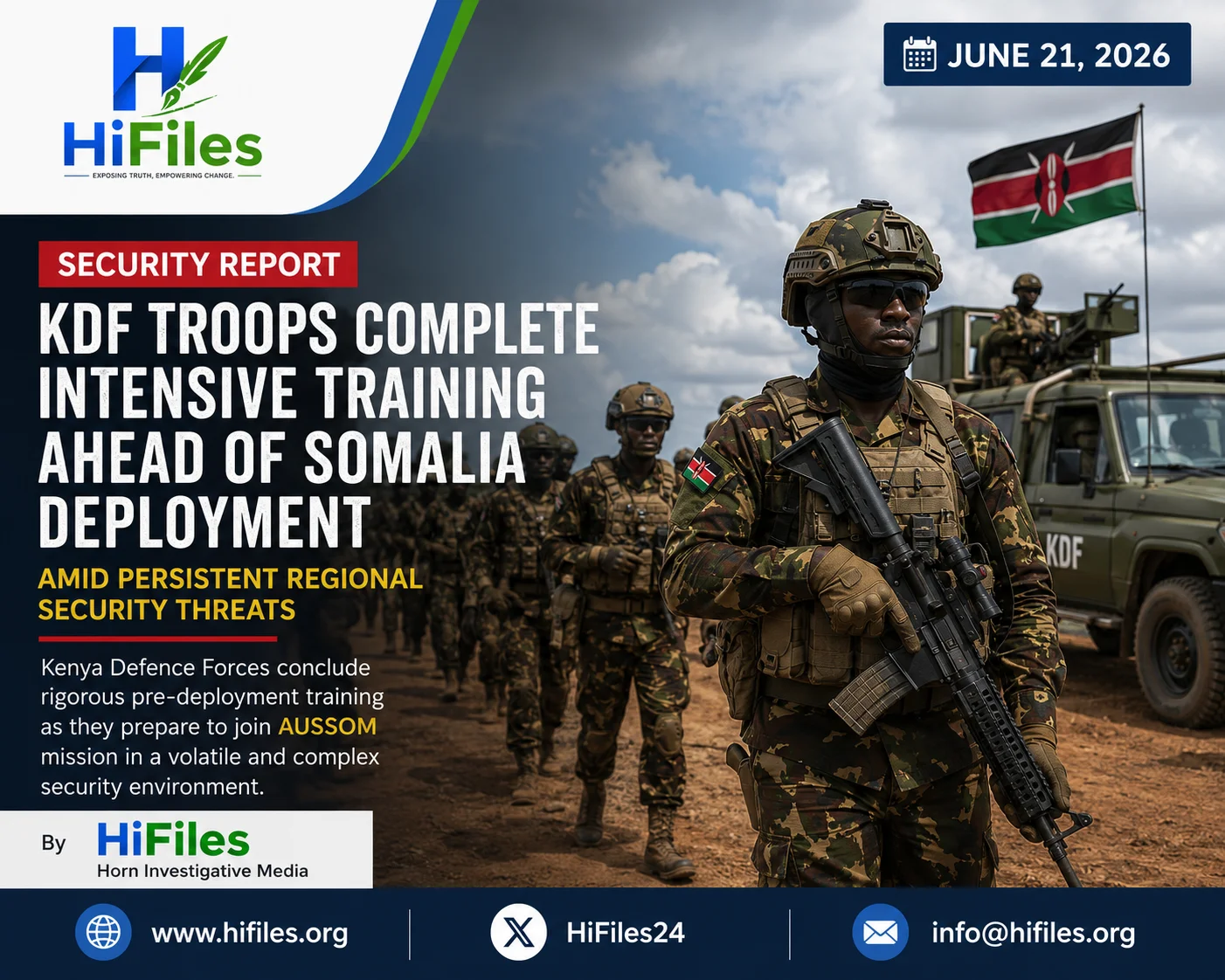
𝗞𝗗𝗙 𝗧𝗿𝗼𝗼𝗽𝘀 𝗖𝗼𝗺𝗽𝗹𝗲𝘁𝗲 𝗜𝗻𝘁𝗲𝗻𝘀𝗶𝘃𝗲 𝗧𝗿𝗮𝗶𝗻𝗶𝗻𝗴 𝗔𝗵𝗲𝗮𝗱 𝗼𝗳 𝗦𝗼𝗺𝗮𝗹𝗶𝗮 𝗗𝗲𝗽𝗹𝗼𝘆𝗺𝗲𝗻𝘁 𝗔𝗺𝗶𝗱 𝗣𝗲𝗿𝘀𝗶𝘀𝘁𝗲𝗻𝘁 𝗥𝗲𝗴𝗶𝗼𝗻𝗮𝗹 𝗦𝗲𝗰𝘂𝗿𝗶𝘁𝘆 𝗧𝗵𝗿𝗲𝗮𝘁𝘀
As Kenyan troops prepare for deployment under AUSSOM, persistent threats from Al-Shabaab and political instability continue to challenge peace and security efforts across the Horn of Africa.
Overview
𝗞𝗗𝗙 𝗧𝗿𝗼𝗼𝗽𝘀 𝗖𝗼𝗺𝗽𝗹𝗲𝘁𝗲 𝗜𝗻𝘁𝗲𝗻𝘀𝗶𝘃𝗲 𝗧𝗿𝗮𝗶𝗻𝗶𝗻𝗴 𝗔𝗵𝗲𝗮𝗱 𝗼𝗳 𝗦𝗼𝗺𝗮𝗹𝗶𝗮 𝗗𝗲𝗽𝗹𝗼𝘆𝗺𝗲𝗻𝘁 𝗔𝗺𝗶𝗱 𝗣𝗲𝗿𝘀𝗶𝘀𝘁𝗲𝗻𝘁 𝗥𝗲𝗴𝗶𝗼𝗻𝗮𝗹 𝗦𝗲𝗰𝘂𝗿𝗶𝘁𝘆 𝗧𝗵𝗿𝗲𝗮𝘁𝘀
𝙊𝙣 𝙅𝙪𝙣𝙚 21, 2026! According to information obtain 𝗛𝗜𝗙𝗜𝗟𝗘𝗦 indicate that the Kenya Defence Forces (KDF) have concluded an intensive pre-deployment training programme at the School of Infantry in Isiolo, preparing troops for deployment to Somalia under the African Union Support and Stabilization Mission in Somalia (AUSSOM).
The exercise, overseen by Central Command General Officer Commanding Major General William Kamoiro, focused on enhancing operational readiness in one of Africa's most complex and dangerous security environments. Soldiers underwent demanding combat drills, force protection exercises, and civil-military cooperation training aimed at preparing them for the realities of operating in conflict-affected regions.
Military officials say the training emphasized tactical decision-making, rapid response capabilities, and coordination in high-pressure situations. Troops were also subjected to realistic mission simulations designed to mirror conditions they are likely to encounter while serving in Somalia.
According to security analysts, the deployment comes at a critical moment for Somalia, which continues to face significant security challenges despite ongoing efforts by Somali authorities and international partners to stabilize the country.
𝙎𝙤𝙢𝙖𝙡𝙞𝙖'𝙨 𝙎𝙚𝙘𝙪𝙧𝙞𝙩𝙮 𝙇𝙖𝙣𝙙𝙨𝙘𝙖𝙥𝙚 𝙍𝙚𝙢𝙖𝙞𝙣𝙨 𝙁𝙧𝙖𝙜𝙞𝙡𝙚
More than a decade after regional forces first entered Somalia to combat extremist threats, Al-Shabaab remains a formidable insurgent group capable of conducting complex attacks against military and civilian targets. While Somali security forces and international partners have reclaimed several territories in recent years, the group continues to maintain influence in parts of central and southern Somalia.
Security experts note that Al-Shabaab's ability to adapt its tactics, including the use of improvised explosive devices (IEDs), ambushes, and targeted assassinations, has allowed it to remain a persistent threat despite sustained military pressure.
"The operating environment remains highly unpredictable," a regional security analyst told HIFILES. "Any force deploying to Somalia today must be prepared for asymmetric warfare, intelligence-driven operations, and rapidly evolving security situations."
𝙄𝙢𝙥𝙤𝙧𝙩𝙖𝙣𝙘𝙚 𝙤𝙛 𝙍𝙚𝙜𝙞𝙤𝙣𝙖𝙡 𝘾𝙤𝙤𝙥𝙚𝙧𝙖𝙩𝙞𝙤𝙣
The training also highlighted interoperability with other AUSSOM troop-contributing countries, reflecting the growing importance of multinational cooperation in addressing regional security threats. Military planners believe that effective coordination among African Union forces remains essential to supporting Somalia's stabilization efforts while protecting key government institutions, infrastructure, and civilian populations.
𝙆𝙚𝙣𝙮𝙖'𝙨 𝙎𝙚𝙘𝙪𝙧𝙞𝙩𝙮 𝙄𝙣𝙩𝙚𝙧𝙚𝙨𝙩𝙨 𝙞𝙣 𝙎𝙤𝙢𝙖𝙡𝙞𝙖
Kenya's continued military presence in Somalia is closely linked to its own national security concerns. For years, Al-Shabaab attacks have targeted communities in Kenya's border regions, particularly in Garissa, Mandera, and Lamu counties.
The group has also claimed responsibility for some of Kenya's deadliest terrorist incidents, including the Westgate Mall attack in 2013, the Garissa University attack in 2015, and the DusitD2 complex attack in 2019. These attacks resulted in significant civilian casualties and reinforced Nairobi's commitment to combating extremist threats beyond its borders.
𝘽𝙤𝙧𝙙𝙚𝙧 𝙍𝙚𝙤𝙥𝙚𝙣𝙞𝙣𝙜 𝘿𝙚𝙡𝙖𝙮𝙚𝙙 𝘼𝙢𝙞𝙙 𝙊𝙣𝙜𝙤𝙞𝙣𝙜 𝘾𝙤𝙣𝙘𝙚𝙧𝙣𝙨
The deployment comes as Kenya reassesses its broader engagement with Somalia. President William Ruto's administration has postponed plans to fully reopen sections of the Kenya-Somalia border, citing ongoing security and political concerns.
Although authorities had earlier announced plans to resume normal cross-border movement and trade, officials now argue that the fragile security situation inside Somalia requires a cautious approach.
Security observers note that while reopening the border could boost economic activity and strengthen regional integration, it also presents challenges related to border management, terrorism prevention, and transnational crime.
𝙇𝙤𝙤𝙠𝙞𝙣𝙜 𝘼𝙝𝙚𝙖𝙙
As KDF troops prepare to deploy under AUSSOM, expectations remain high that regional and international efforts will continue to support Somalia's path toward greater stability. However, analysts warn that military operations alone are unlikely to deliver lasting peace without parallel progress in governance, political reconciliation, economic development, and institutional reform. For the soldiers preparing to serve, the mission represents not only a test of military capability but also a contribution to the broader goal of regional security and stability in the Horn of Africa.
𝙃𝙤𝙧𝙣 𝙄𝙣𝙫𝙚𝙨𝙩𝙞𝙜𝙖𝙩𝙞𝙫𝙚 𝙁𝙞𝙡𝙚𝙨 (𝙃𝙄𝙁𝙄𝙇𝙀𝙎) 𝑆𝘦𝑐𝘶𝑟𝘪𝑡𝘺, 𝐼𝘯𝑓𝘰𝑟𝘮𝑎𝘵𝑖𝘰𝑛 𝑎𝘯𝑑 𝑅𝘦𝑔𝘪𝑜𝘯𝑎𝘭 𝘈𝑓𝘧𝑎𝘪𝑟𝘴 𝘋𝑒𝘴𝑘